
Malacca (also known as Melaka) is one of Malaysia’s most important historical cities, strategically located along the Strait of Malacca. Once a thriving ancient port, the city was founded by a Sumatran prince, Parameswara, who established the Malacca Sultanate and transformed the area into a major regional trading centre. During its golden era, Malacca was a key hub in the spice trade and was often referred to as the “Venice of the East.”
Walking through the narrow streets and alleys of Malacca’s city centre, visitors will discover well-preserved heritage buildings, traditional businesses, and handcrafted souvenirs. The city’s rich architectural landscape reflects strong Portuguese, Dutch, and British colonial influences, creating a unique atmosphere that continues to attract visitors from around the world.

Historic Landmarks and Cultural Heritage
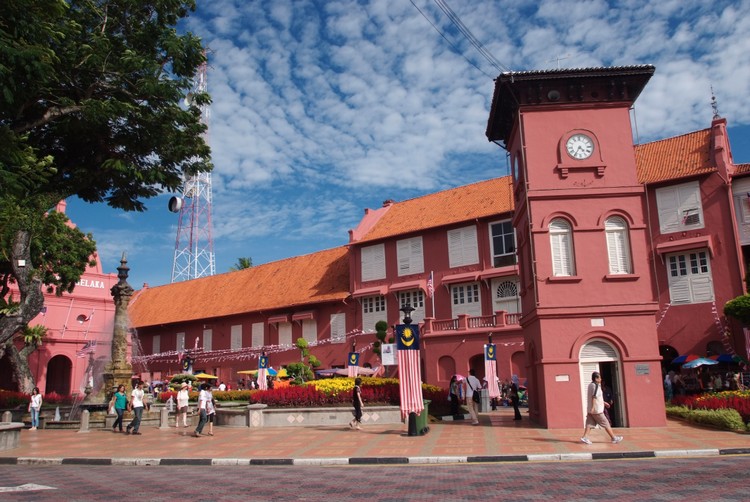
Malacca is home to many iconic historical landmarks, including the Dutch Stadthuys, Christ Church, St. Paul’s Church, and A’Famosa — a fortress built by the Portuguese in 1511. Jonker Street (Jalan Hung Jebat) is a vibrant area known for antique shops, art galleries, and souvenir stores.
While many of these heritage sites are visually stunning, some areas may have limited accessibility due to stairs, uneven surfaces, or preserved structures. However, with careful planning and assistance, wheelchair users can still enjoy the surroundings, outdoor areas, and nearby attractions.
Exploring Beyond the City Centre
For a different travel experience, visitors may choose to explore Malacca by the city’s colourful trishaws, which offer a lively and scenic way to tour the city centre (note: trishaws are generally not wheelchair accessible). Approximately 15 kilometres from the city centre, the Air Keroh area features recreational forest parks, a zoo, a crocodile farm, and Mini Malaysia & ASEAN Cultural Park, providing additional leisure options. Some attractions in this area offer wider pathways and open spaces that may be suitable for visitors with mobility needs.

Portuguese Heritage and Festivals
In the southern part of Malacca lies the well-known Portuguese Settlement at Ujong Pasir. Visitors can experience the lively atmosphere of Portuguese Square, enjoy traditional Portuguese-style seafood, and immerse themselves in the community’s unique culture. June is an especially popular time to visit, as the community celebrates major festivals such as San Juan and San Pedro.
Museums and Peranakan Culture
Often referred to as the “City of Museums,” Malacca offers a wide range of cultural and historical museums. The Independence Memorial Museum documents Malaysia’s journey from colonial rule to independence, while the Maritime Museum — designed to resemble the Portuguese ship Flor de la Mar — showcases Malacca’s maritime history from the Sultanate era through the colonial period.
Malacca is also the heart of the Peranakan (Baba-Nyonya) community, descendants of early Chinese settlers who intermarried with local Malays. Their rich cultural heritage is reflected in traditional architecture, customs, and cuisine. The Baba & Nyonya Heritage Museum, located along Tun Tan Cheng Lock Street, was converted from a traditional Peranakan townhouse and displays antique furniture, ceramics, and traditional attire. As a heritage building, accessibility may be limited in certain indoor sections.
Accessible Transportation
Due to the historical nature of many attractions in Malacca, accessible transportation plays an important role for wheelchair users, seniors, and travelers with mobility needs.
Love On Wheels Mobility provides wheelchair-accessible vehicles equipped with automated lifts and trained drivers, offering safe and comfortable transportation between Kuala Lumpur, Selangor, Malacca, and selected destinations across Malaysia.
Advance arrangements allow visitors to explore Malacca at a relaxed pace while minimizing physical barriers.
Photo Credits:
Photos in this article are courtesy of the Malaysia Tourism Promotion Board and sourced from PromoteMalaysia.com.tw — official tourism promotion of Malaysia.